Start with phase guidance
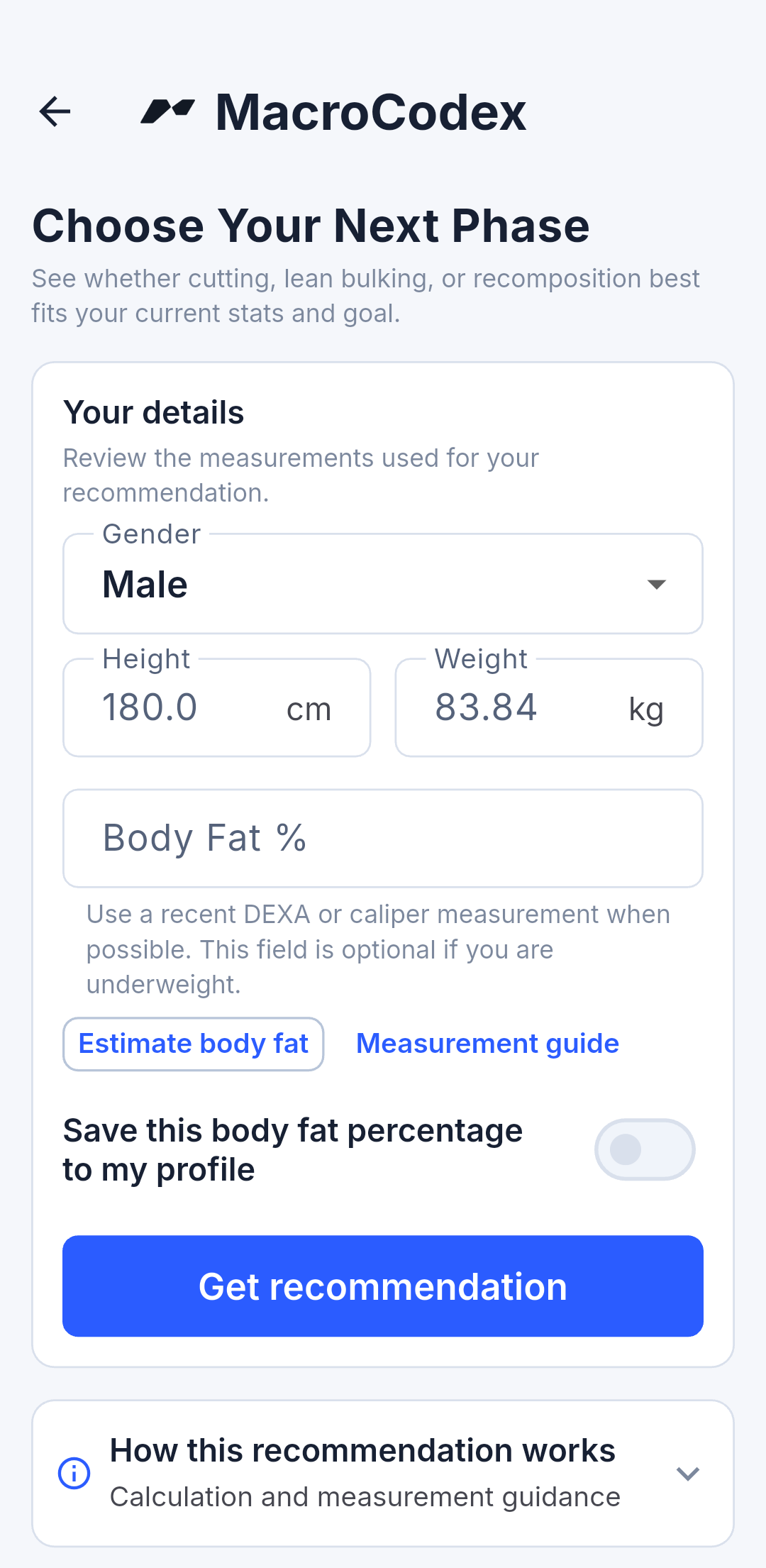
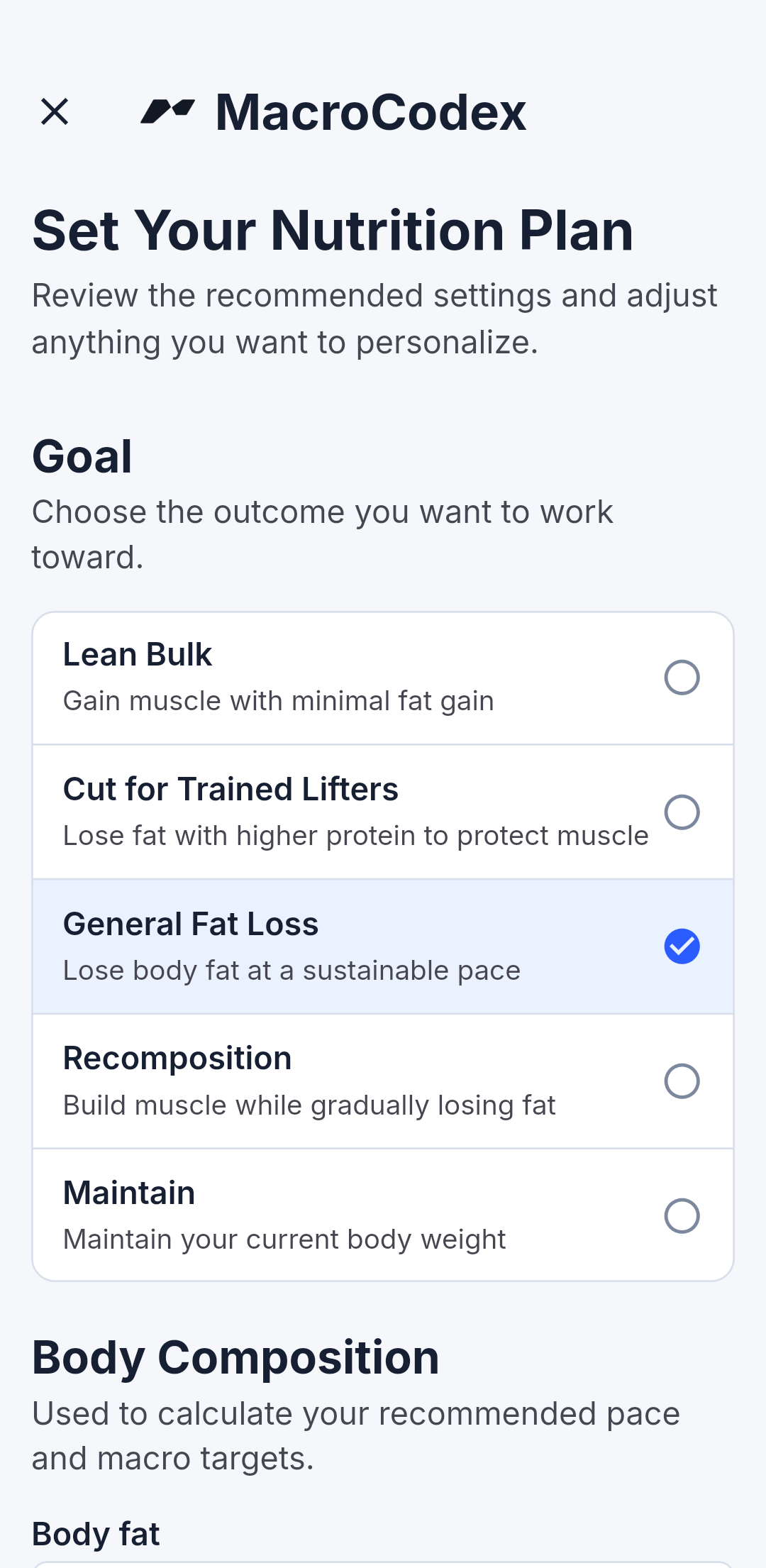
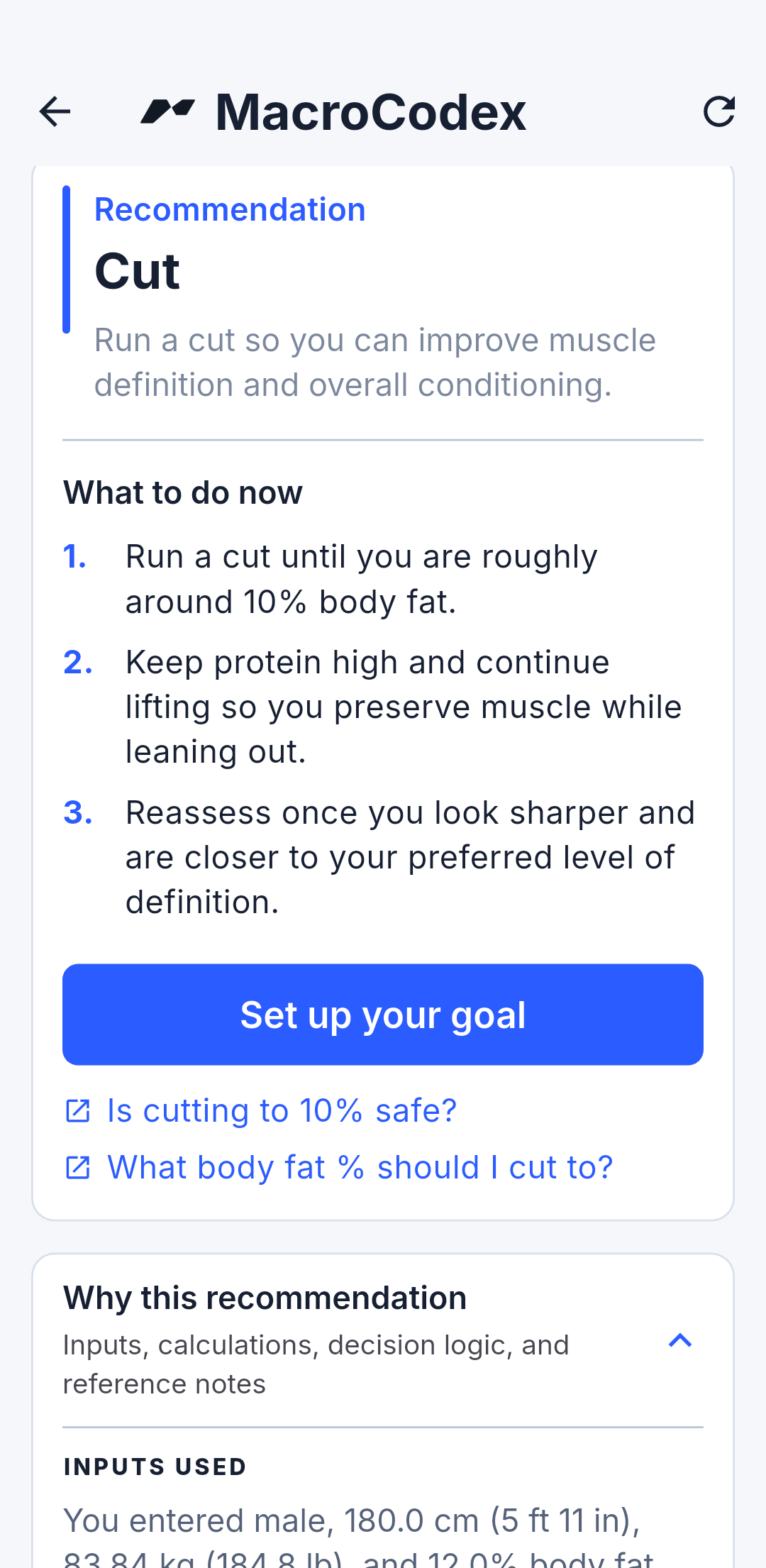
The planner helps decide whether cutting, bulking, or recomposition makes sense first.
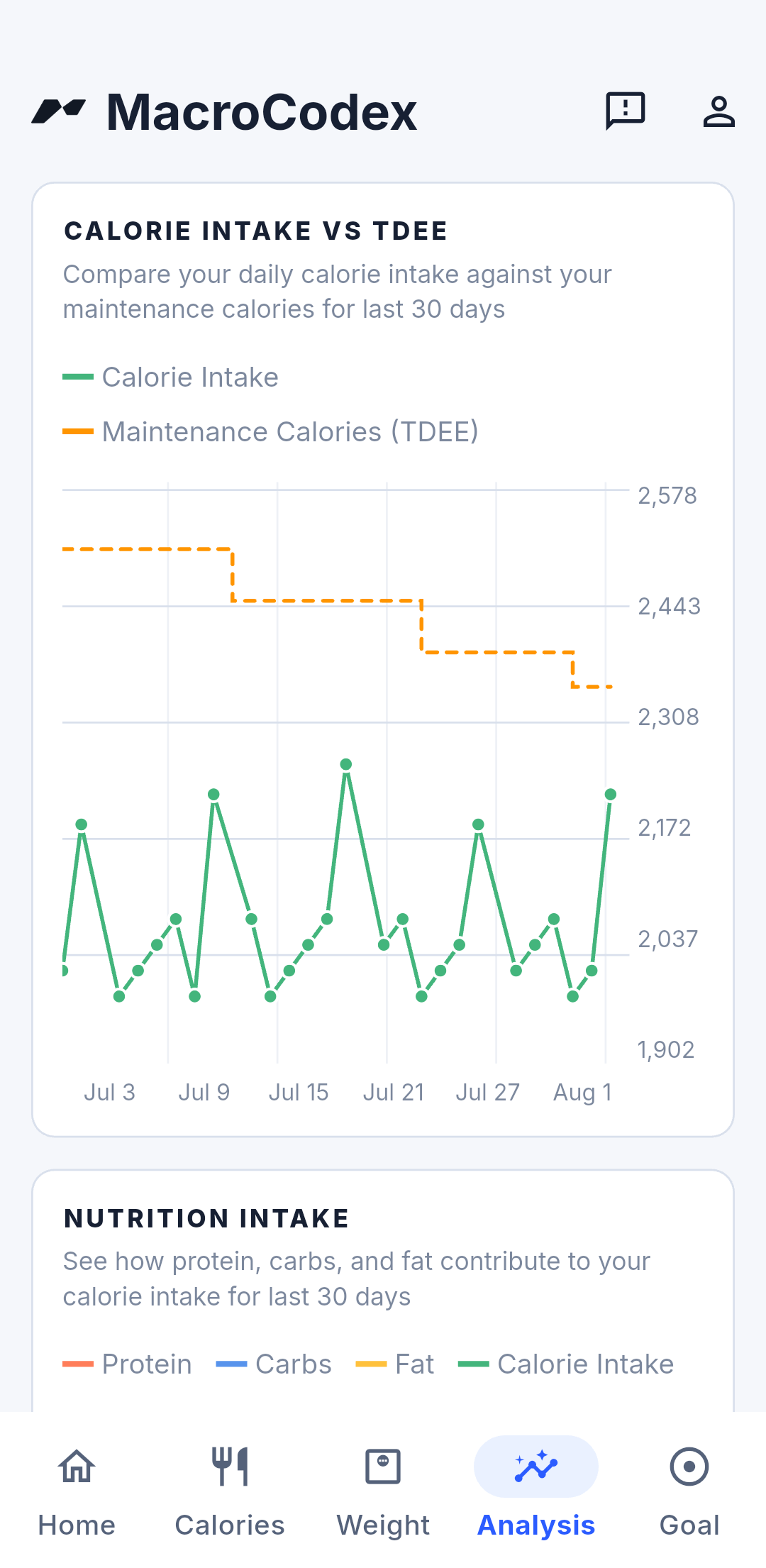
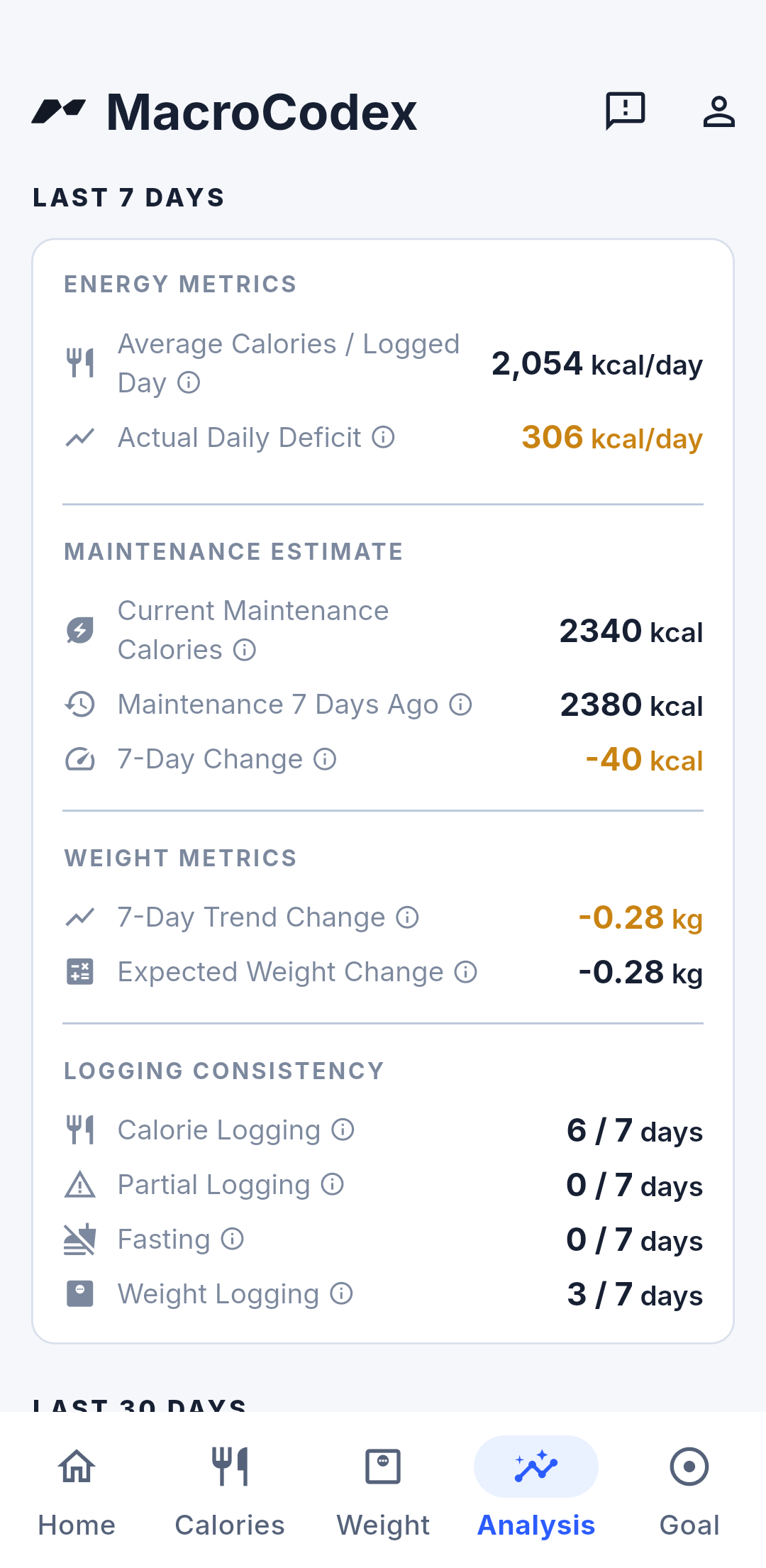
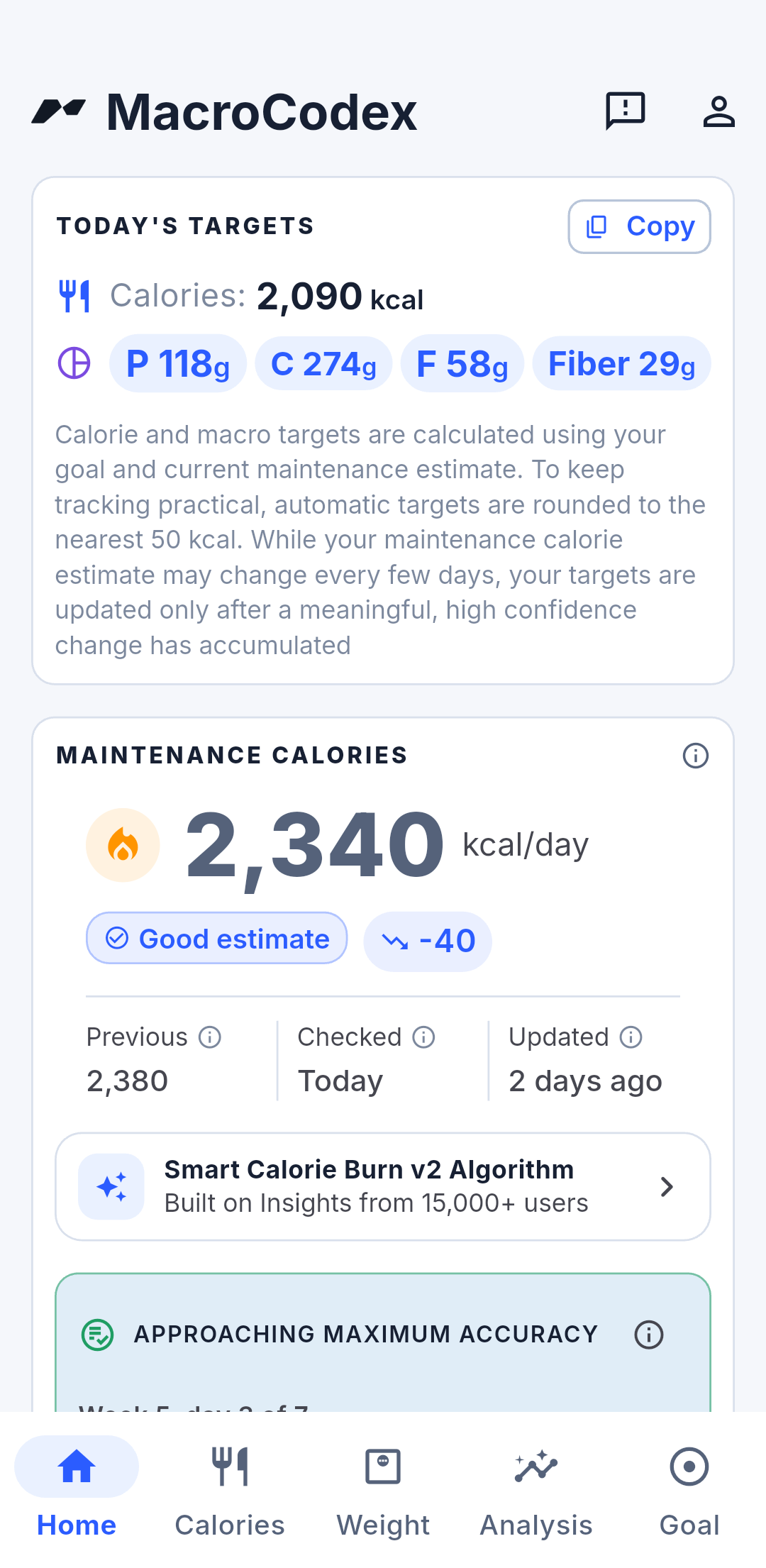
Does your weight loss or weight gain stop after a while on a diet? MacroCodex helps you spot dips in maintenance calories from metabolic adaptation, then auto-adjusts your calorie target and macros so your plan stays aligned with your real maintenance calories (TDEE).
It usually takes MacroCodex around 3 to 4 weeks of real intake and weight data to lock onto your true maintenance calories. Static Maintenance Calories (TDEE) calculators can be off by hundreds of calories for some people, because they do not learn from what your body is actually doing.
Most TDEE calculators rely on formulas derived from population averages using regression analysis. While formulas such as Katch-McArdle can account for body fat percentage, they cannot capture individual differences in metabolism, activity levels, hormones, or lifestyle. They also struggle to account for metabolic adaptation from long-term dieting, PCOS, thyroid disorders, and other factors that influence calorie needs.
The app is not just a calculator. It helps users choose a direction, build a plan, review trend data, and keep the daily targets visible.
The planner helps decide whether cutting, bulking, or recomposition makes sense first.
Users choose the actual outcome and convert it into calories and macro targets.
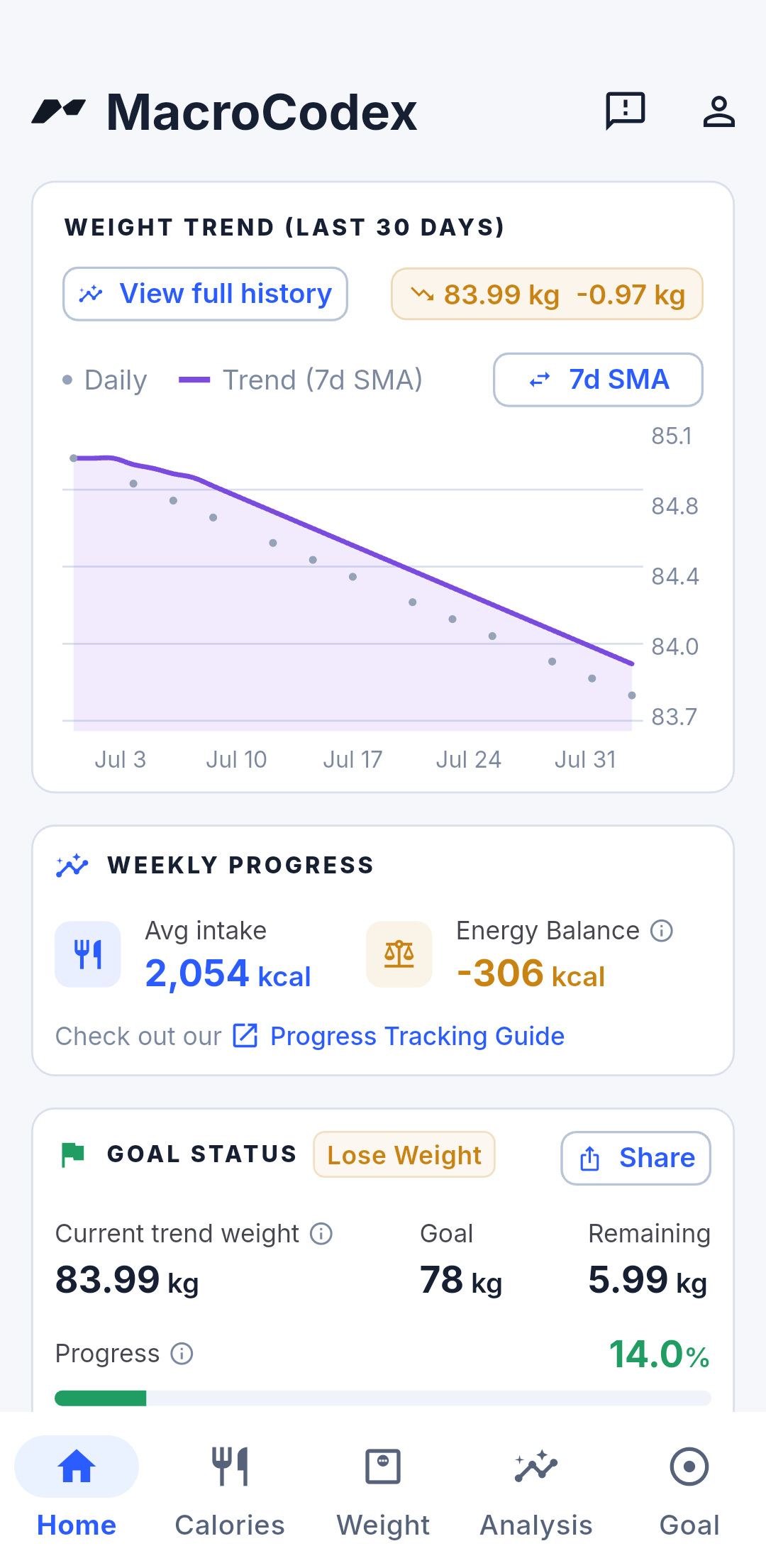
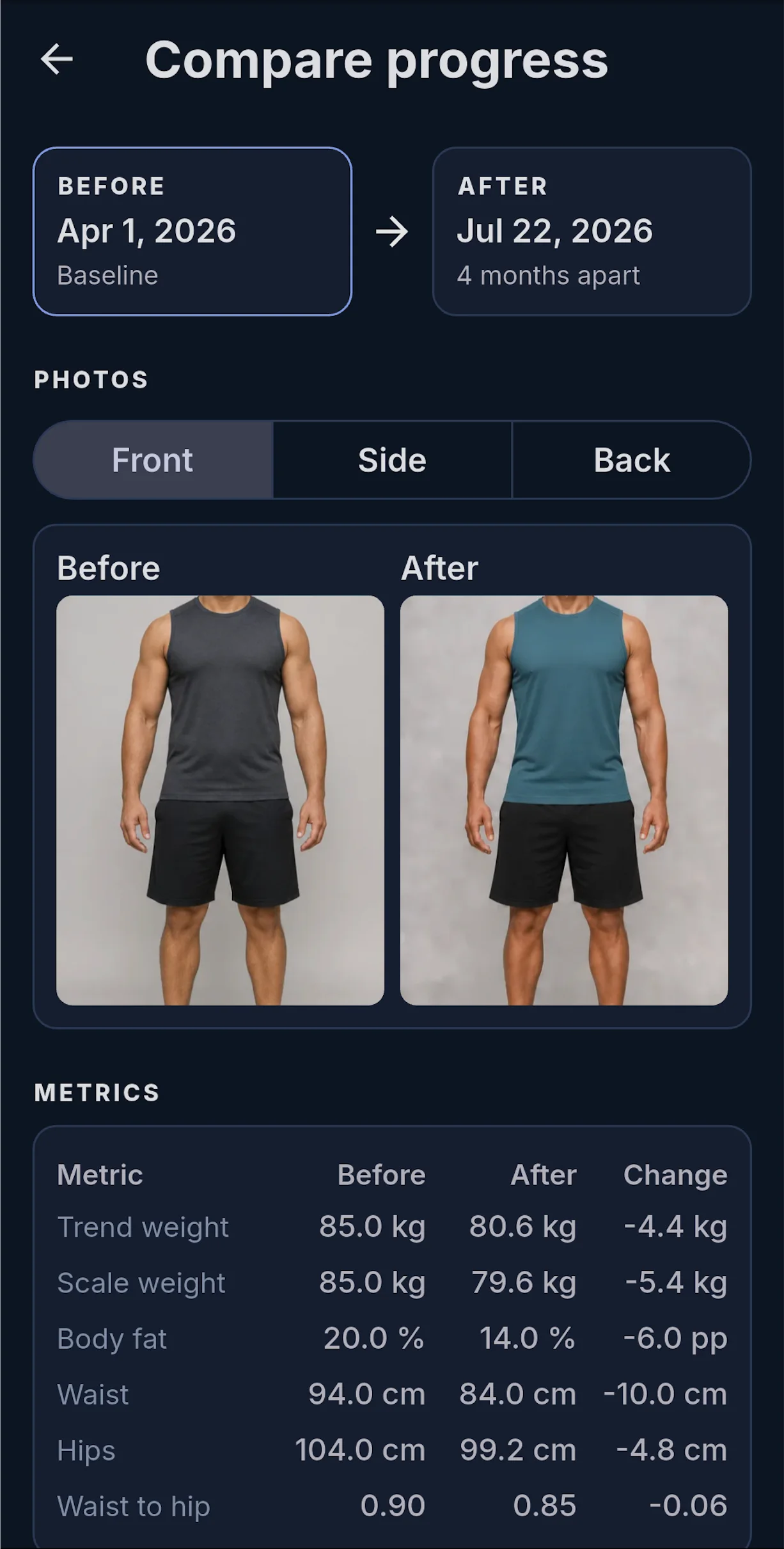
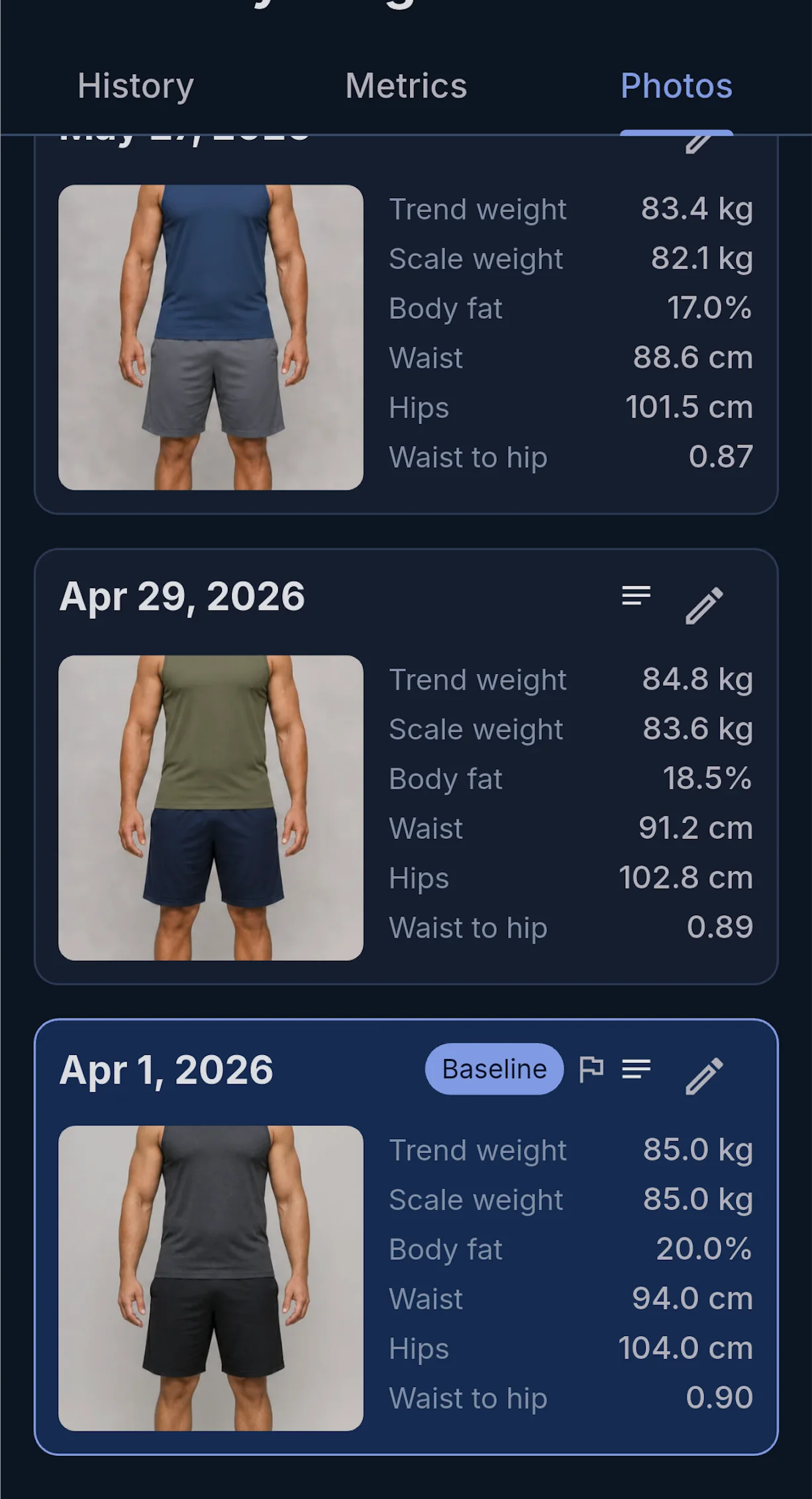
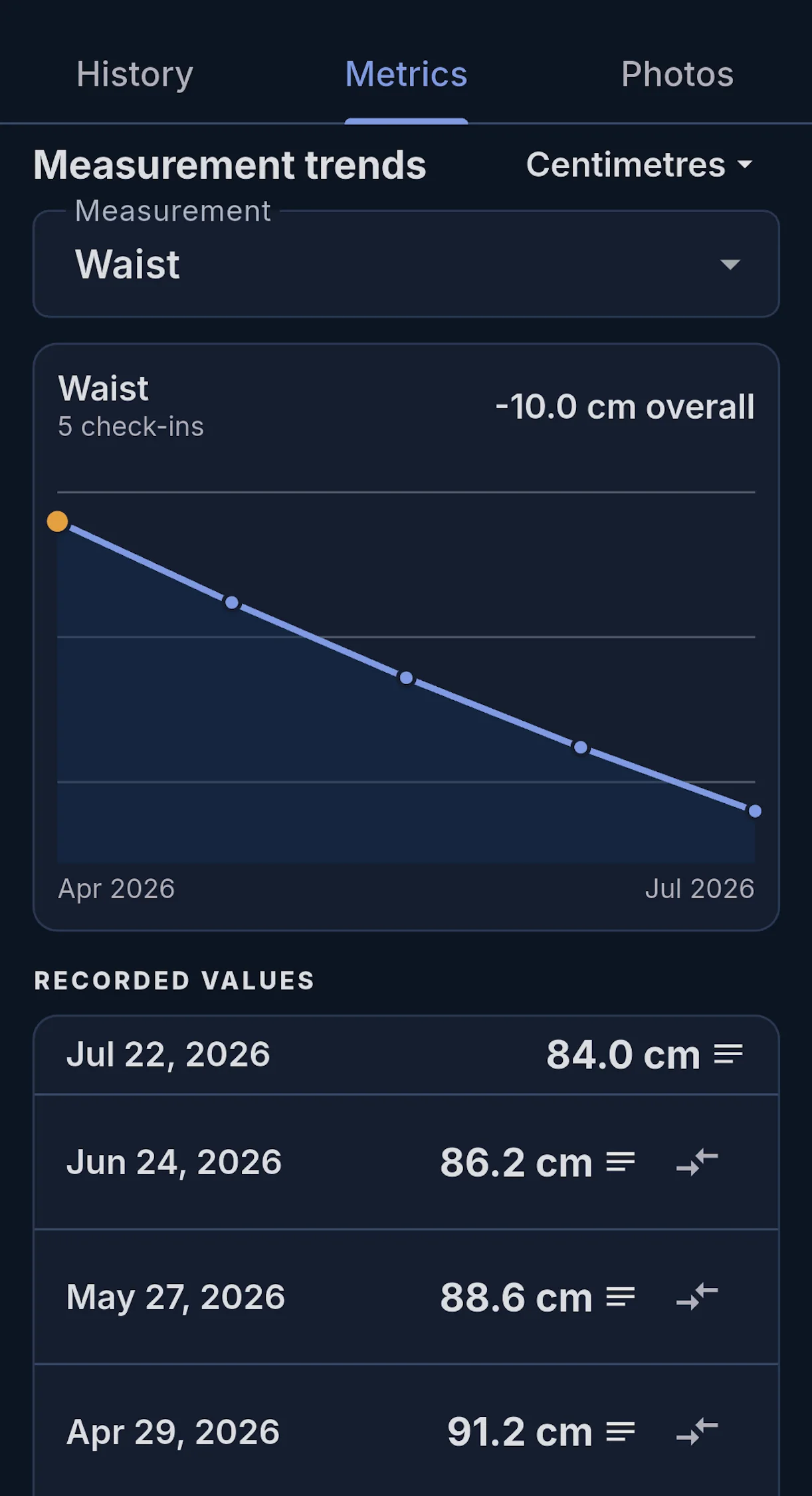
Weekly metrics show whether intake, weight trend, and balance support the current goal.
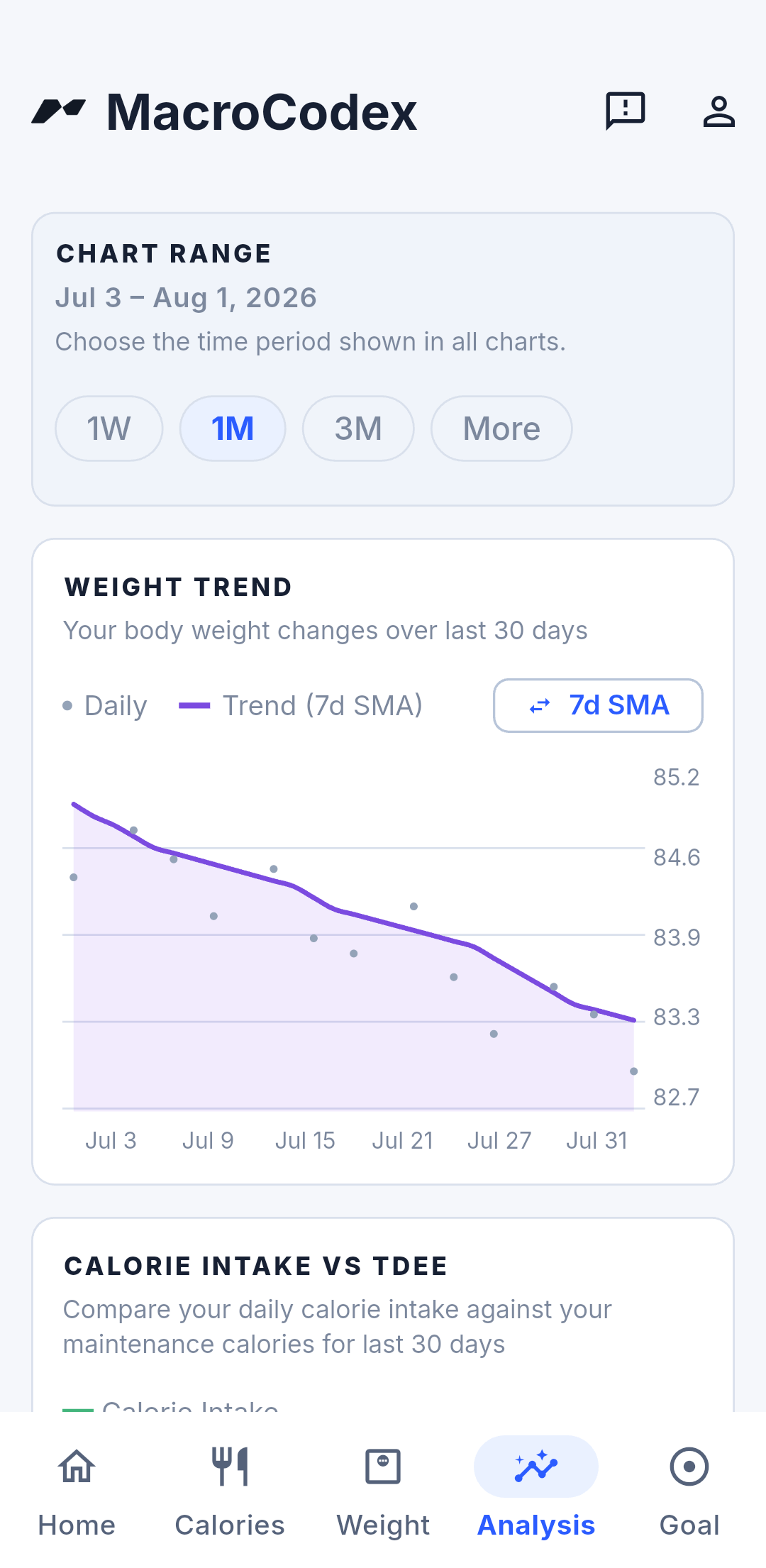
Rolling trend and progress cards keep users focused on signal instead of daily swings.
The app also helps with the small day-to-day decisions: staying active, following your targets, trusting your trend, and choosing the right phase at the right time.
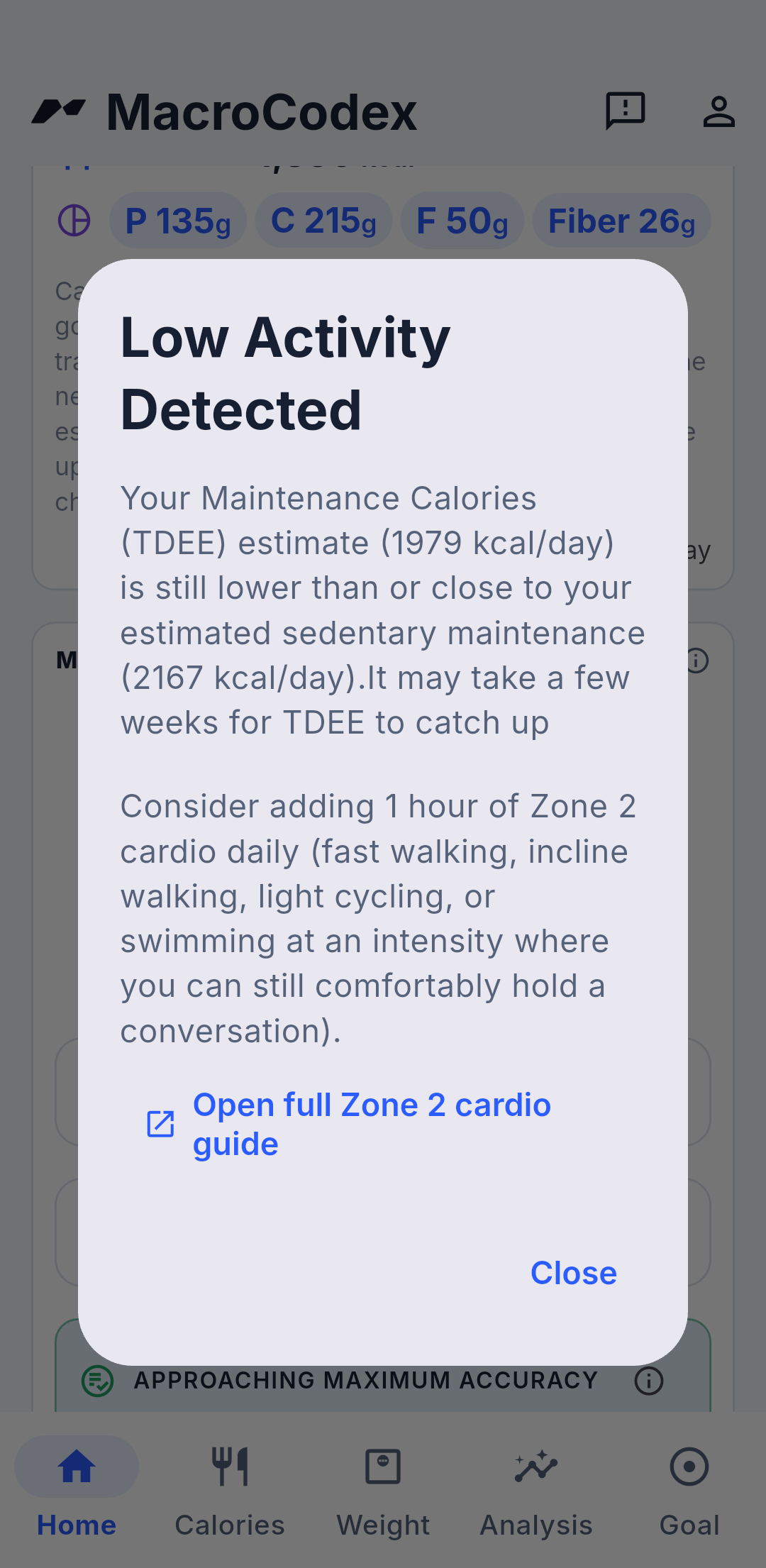
MacroCodex can warn you when you are turning sedentary and nudge you to become more active before it quietly slows progress.
Your calorie and macro targets stay clear each day, so you can simply follow the plan and keep moving toward your goal with less friction.
Trend views make day-to-day weight changes easier to handle, so a random spike or drop does not need to send you into panic mode.
The planner helps you decide when to cut, lean bulk, or recomp instead of bouncing between phases without a clear reason.
Common questions about maintenance calories, logging, imports, and how MacroCodex adapts to your real data over time.
Select the option that describes you best. The app will still work even if you choose the wrong sex, because it mainly relies on your calorie intake and weight data, not your sex.
Sex is only used for the initial estimate.
MacroCodex uses the Katch-McArdle formula for the initial estimate. After that, it tunes your maintenance calories using your weight and calorie intake data.
It usually reaches good accuracy after about 3 weeks, or 21 days.
Yes. During onboarding, the app gives you the option to enter your own maintenance calories.
No. If you are in a surplus, your weight goes up. If you are in a deficit, your weight goes down. MacroCodex uses that relationship to estimate your true maintenance calories over time.
Comparing intake against your weight trend is more reliable than depending on wearable calorie-burn estimates.
Yes. You can adjust your macros to fit keto or any other macro split you prefer.
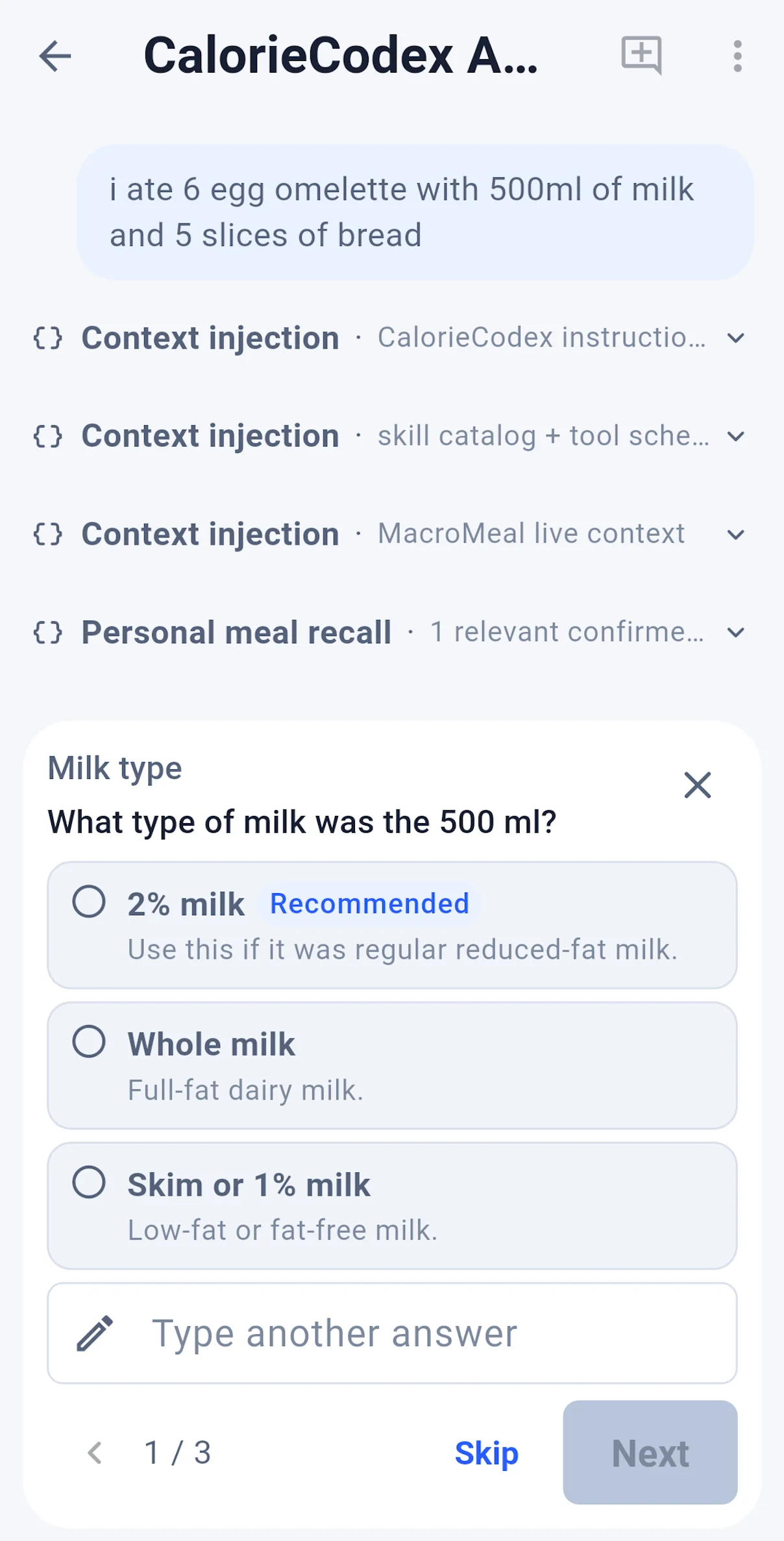
For a reliable estimate, aim to log at least 7 out of 10 days. The app only needs your total calorie intake recorded once per day.
Yes. You can use Google Health Connect to import your data.
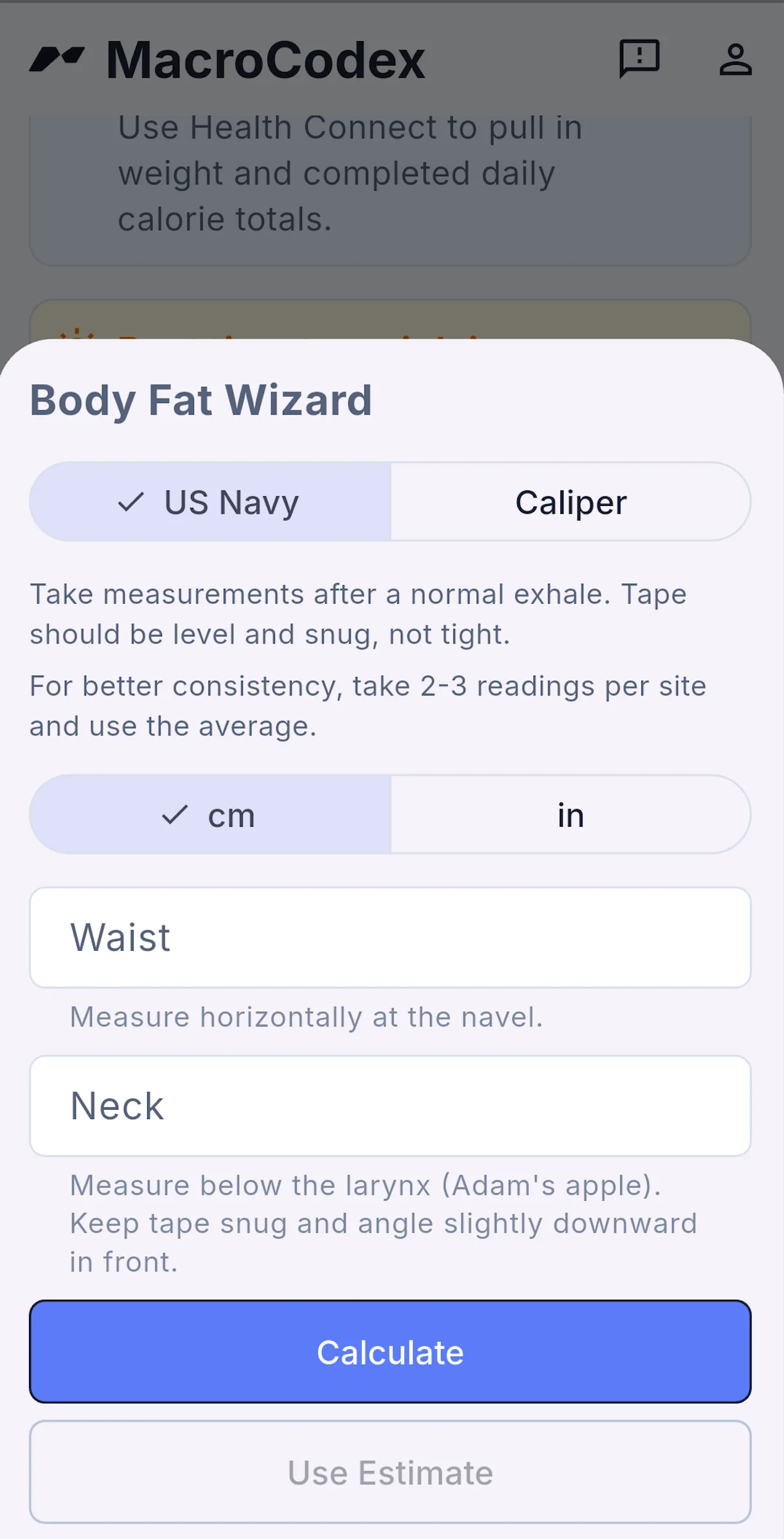
No. Most smart scales and watches are not reliable enough for an accurate body fat percentage estimate. We recommend using DEXA if available, or the US Navy formula or calipers inside the app.
For more detail, see the body fat guide.
You do not need to manually tweak the app day by day. If your overall activity level increases over time, your maintenance calorie estimate will rise as well.
If you choose to eat above or below target on a high-activity day, just log it normally. The algorithm will still adapt over time.
Follow our calorie tracking guide for the recommended approach.